
For this event, HighTorque Robotics fielded off‑the‑shelf mass‑production models originally built for developers and education scenarios, rather than custom‑built demo robots for show‑case stunts. Mini‑Pi’s appearance represents a large‑scale “delivery validation”: whether mass‑produced robots can deliver stable performance under high‑intensity, multi‑scenario challenges at top‑tier competitions marks a real industry dividing line.
Three months ago, Mini‑Pi went viral across the internet when it ran while holding a baby bottle during the Yizhuang Humanoid Robot Half Marathon. Now returning for the Robot Games, HighTorque has achieved notable technical progress: capabilities have expanded from long‑distance single‑mode running to a multi‑ability matrix including swarm coordination, obstacle crossing and artistic performance. It stands among the very few participants at this robot games that can stably realize “multi‑event participation, stable mass deployment on‑site, and extremely low post‑competition hardware damage rate”.
► Competition Highlights: Proof of Comprehensive Capabilities for a Mass‑produced Platform
In the small‑group 100‑meter dash, Mini‑Pi demonstrated solid engineering advantages. High instantaneous torque from self‑developed joints enabled powerful instant starts and precise finish‑line sprints, completing the full race without hardware damage. Among participating teams running Mini‑Pi, the “Smart‑Leap Future Team” from Nanjing University of Aeronautics and Astronautics raced alongside four other competitors and crossed the finish line second in its group.
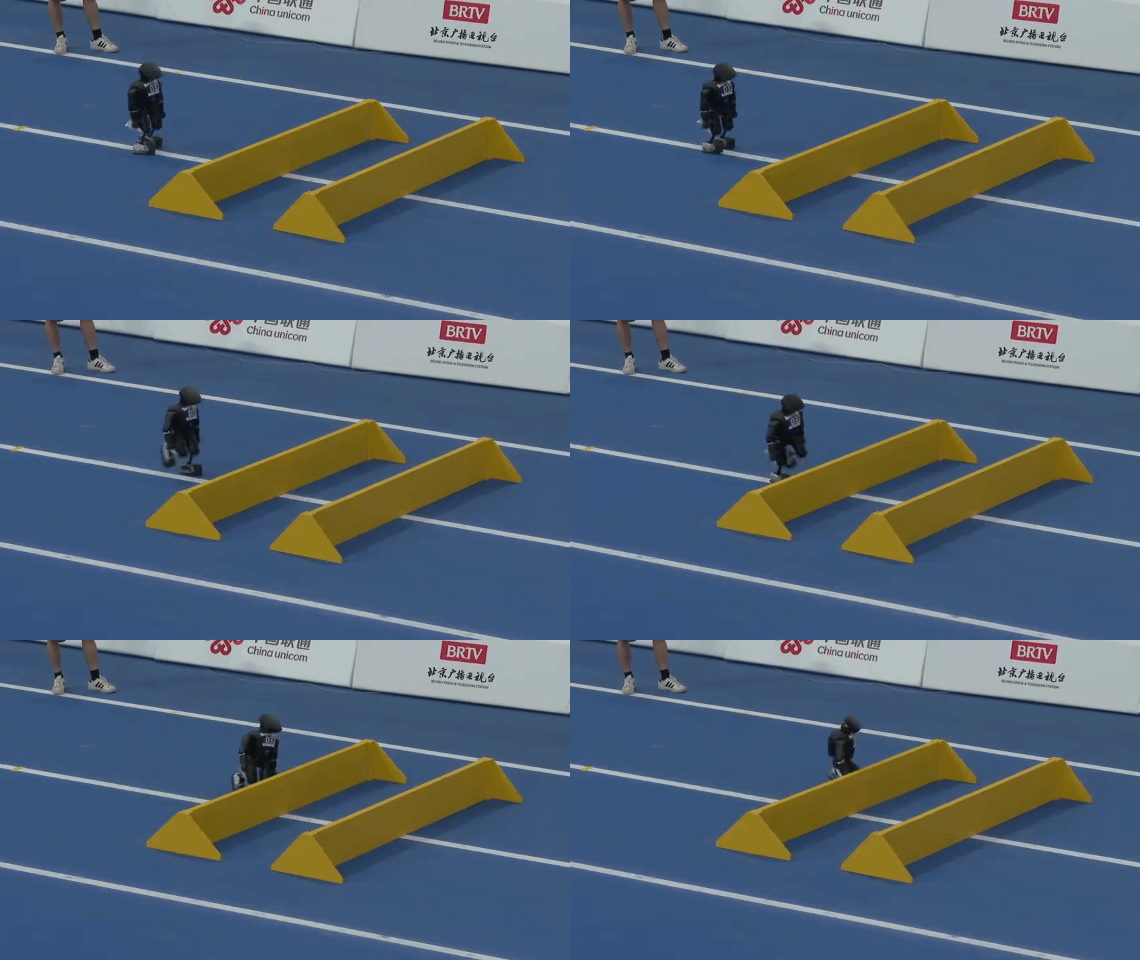
During the final round of the 100‑meter obstacle race, Mini‑Pi smoothly cleared slope obstacles. When confronted with barriers nearly as tall as itself, the robot repeatedly attempted, fell down and got back up, earning it the online nickname “the most inspiring robot”.
Despite inherent disadvantages in body size and height, Mini‑Pi delivered powerful instantaneous bursts and stable landings in high jump and long‑jump events. It accurately executed full‑sequence motions including take‑off force generation, posture correction and landing shock absorption.
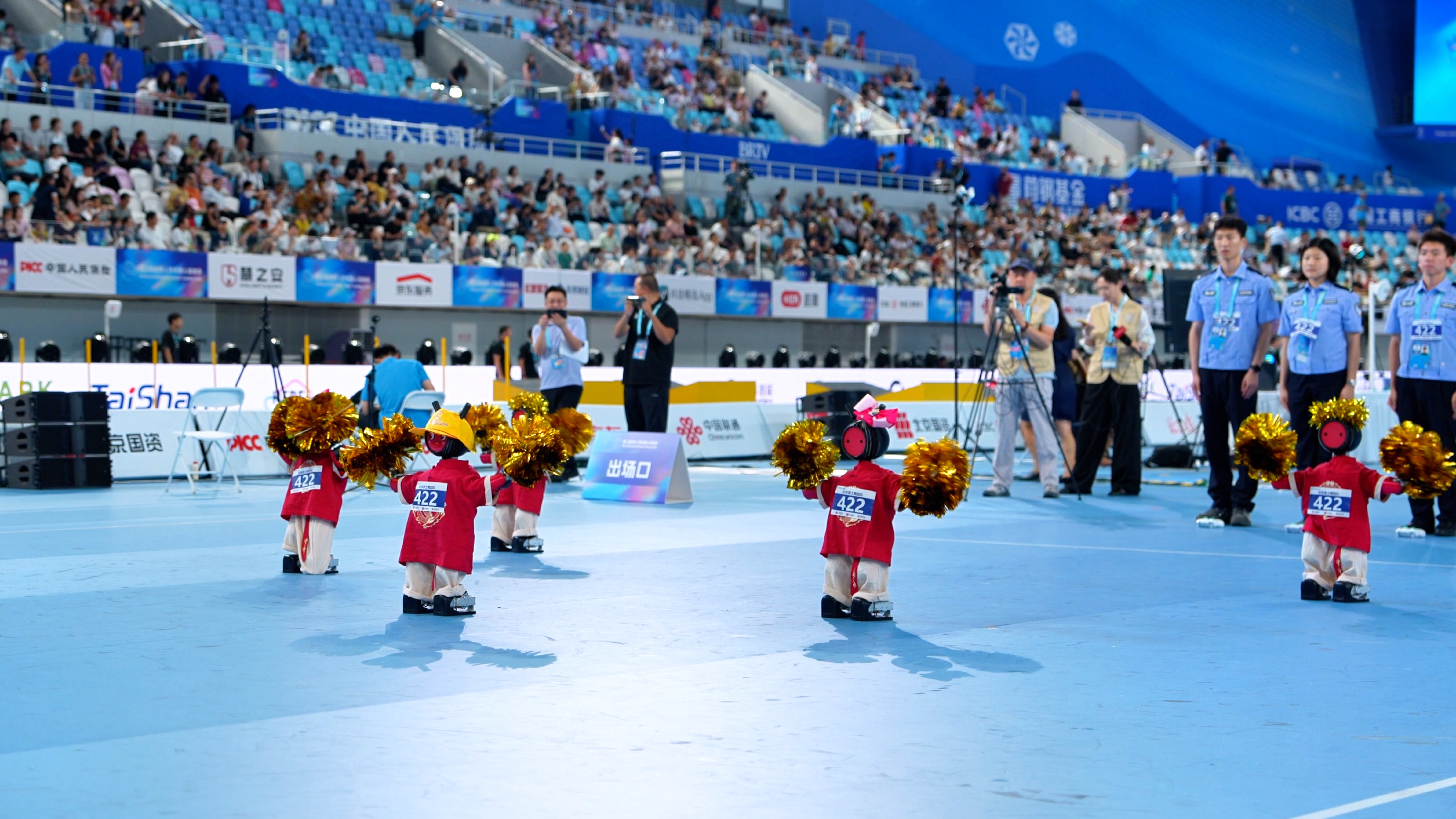
Beyond track‑and‑field events, performance‑focused contests became Mini‑Pi’s true showcase. Multiple teams equipped with Mini‑Pi competed side‑by‑side in the cheerleading competition. The modular robot body supports personalized appearance customization; teams fitted their robots with distinctive decorations and choreographed dance routines for highly compelling stage presentations.
For martial‑arts and dance categories, Mini‑Pi’s high‑degree‑of‑freedom joints faithfully reproduce diverse traditional Tai Chi and martial‑art moves with smooth, fluid continuous motion. Street‑dance performances leverage full‑body multi‑joint linkage to deliver detailed, rich physical choreography.
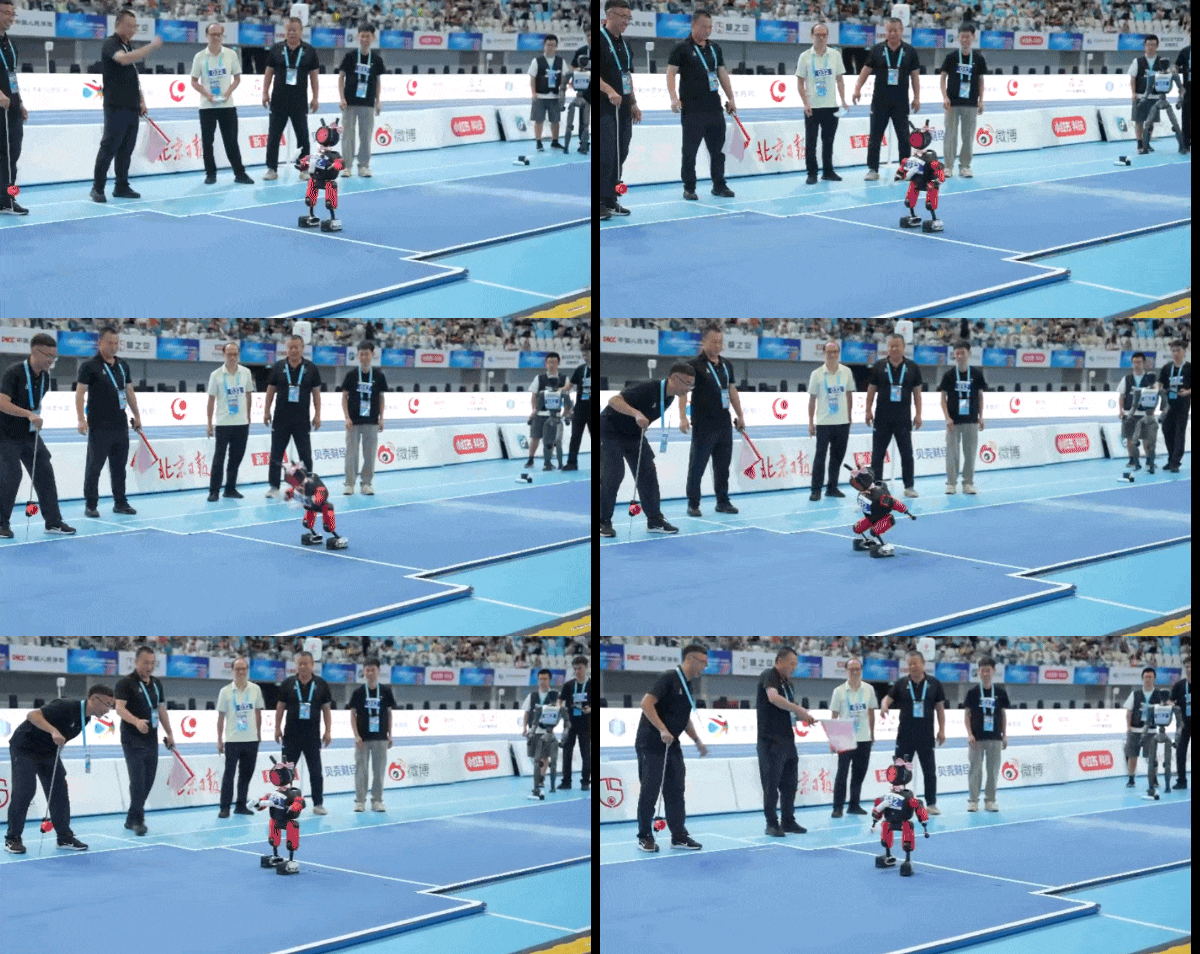
Such motion‑control expertise honed through martial‑arts and dance performances has been forged through real‑world commercial deployments. The robots have been deployed for Weibo Night receptions, toy‑themed parades and various event showcases. They have evolved from simple demonstration hardware into multi‑functional service carriers, balancing competitive performance for professional contests and real‑world commercial application value.
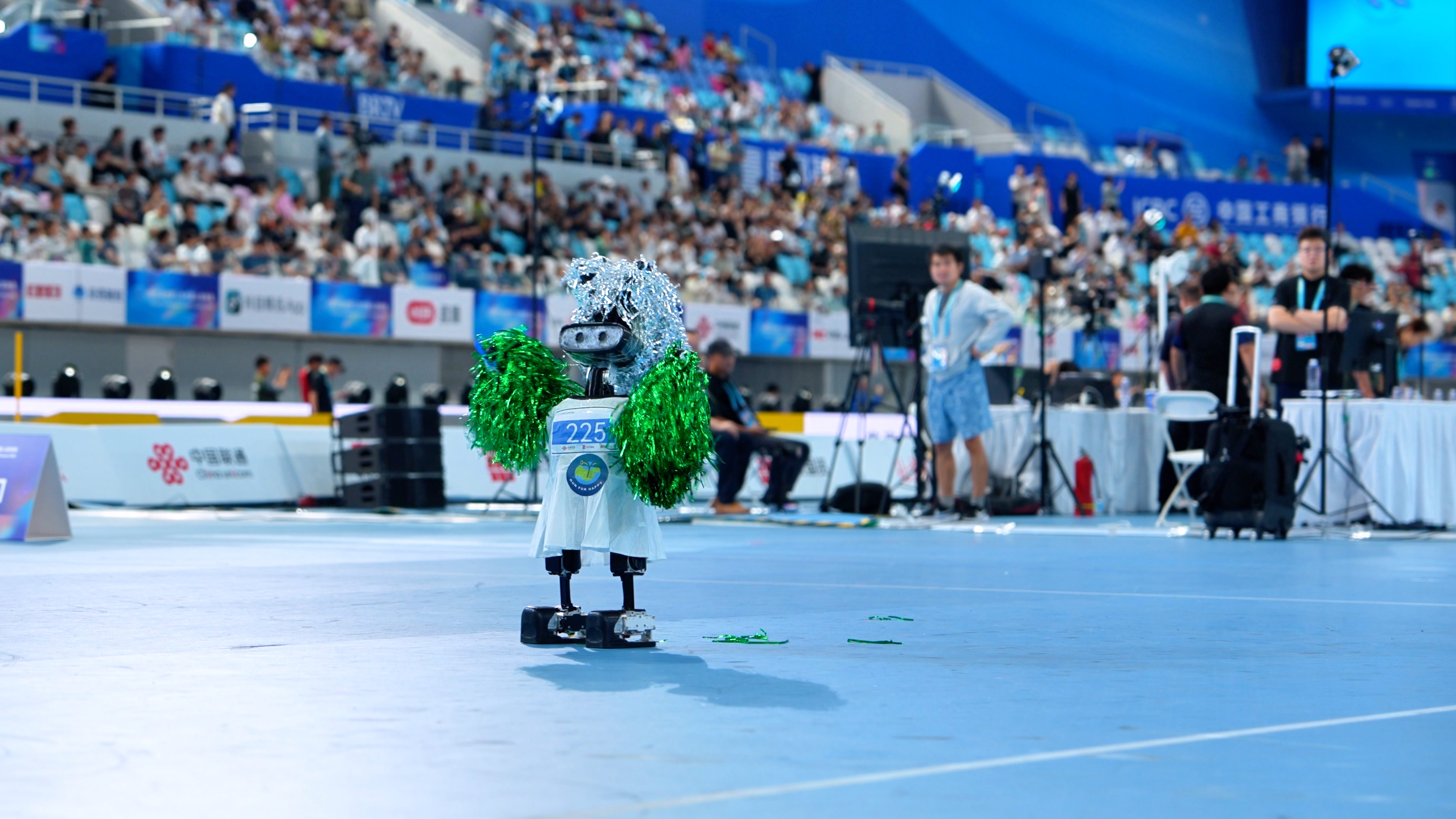
From 100‑meter sprints to Tai Chi, long jump to cheerleading, nearly all competition events were completed using the identical mass‑produced Mini‑Pi plus hardware. No special‑event‑specific modifications were applied. HighTorque is one of very few competitors at this games deploying the same mass‑produced robot platform across an extremely wide span of competition categories.
► A Crowd‑favorite Both On‑and‑off‑venue: Winning Popularity with Cuteness and Competence
Mini‑Pi earned its title as a true crowd‑favorite both inside and outside the competition arena. It made a surprise opening‑ceremony appearance posing alongside celebrity guests, went viral for repeated obstacle‑crossing attempts, and generated “cute‑contrast” moments during high‑jump and long‑jump rounds. The compact, agile mass‑produced humanoid robot drew wide‑ranging attention from Chinese and international journalists.
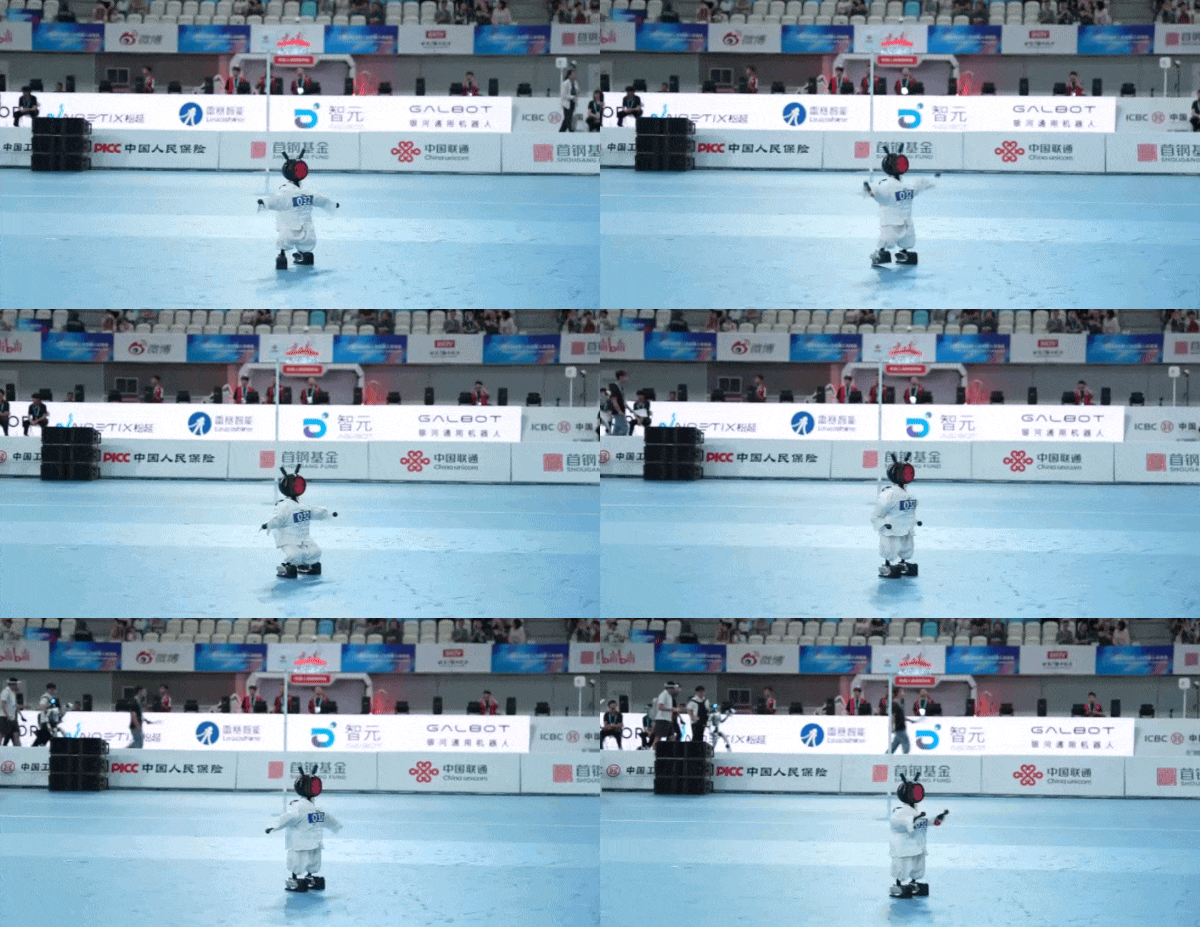
Heart‑warming and inspiring competition moments spread widely online, bringing dual exposure for both technical strength and public appeal. Major mainstream media outlets including Xinhua News Agency, CCTV, Half‑Month Talks, the Central Committee of the Communist Youth League of China, China News Service, Beijing Daily and Nanfang Daily featured Mini‑Pi extensively. They praised it as an all‑rounder robot “capable of running marathons as well as performing cheerleading”, releasing multiple reports covering its courageous challenge‑taking and endearing on‑site moments.
Heat kept climbing across social‑media platforms, with multiple related topics trending. On Xiaohongshu, fun clips of Mini‑Pi carrying schoolbags, holding milk bottles, and being gently escorted off‑court by staff went viral. Multiple hot‑topic tags emerged such as “cutest robot at the Robot Games” and “tiny adorable robot Mini‑Pi”. On Douyin, numerous trending hashtags appeared: “Robot out working before it’s fully grown”, “Stands still deep‑in‑thought after sprint failure”, “High‑jump performance melts the whole audience”. Footage showing the robot persisting toward the finish line even when falling behind in the 100‑meter race touched countless netizens.
Competition popularity also crossed national borders. Highlight clips circulated widely on overseas social platform X. Its cute appearance paired with persistent, courageous competition performances won large numbers of likes and discussions from overseas audiences. Many international tech enthusiasts became fans of this domestically mass‑produced Chinese humanoid robot. These heart‑warming, inspiring stories gained global exposure and expanded international influence.
While most industry players focus on large‑size, high‑cost humanoid robots, HighTorque sticks to a product route emphasizing miniaturization, safety, mass‑producibility and accessibility. Its desktop‑sized footprint fits labs and home environments with limited space, lowering usage barriers and safety risks. It truly delivers “one robot unit, one complete technical system, support for multiple usage scenarios”.
From long‑distance real‑world testing at the Yizhuang Half Marathon, to this full‑scope trial by fire at the World Humanoid Robot Games and widespread public attention, HighTorque iterates its technology through real‑world mass‑production‑grade competitions and refines products via large‑scale real‑world scenarios. It breaks away from the common‑industry trap of “showing prototypes at competitions without deliverable commercial products”. Beyond research‑education and commercial‑showcase use‑cases, product capabilities are advancing toward household deployment and daily‑life companionship. Humanoid robots are evolving from lab exhibits and competition‑only prototypes toward commercially viable, accessible and scalable industrial products. They become a new‑generation intelligent interactive terminal accessible to everyone, delivering both practical tool value and emotional‑companion capabilities.
 Form submitted successfully!
 Form submission failed!
 Phone:400-6080-891
  Email:service@hightorque.cn
  Wechat:GQJD2022