
On November 18, as the 2026 APEC year in China brought a wave of global science and technology exchange, High Torque Robotics received a delegation of more than 30 European founders, executives and decision-makers visiting China under the theme of physical AI and robotics. The two sides held in-depth discussions on deploying embodied intelligence, commercializing small humanoid robots, and cooperation across the China–Europe innovation chain.
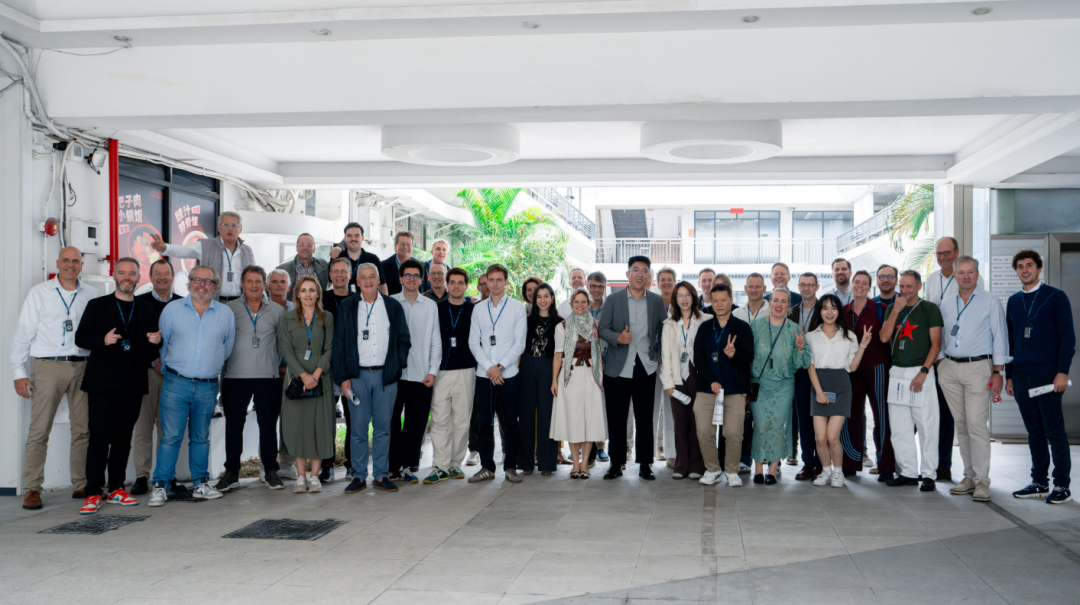
The delegation gathered European executives focused on physical AI and robotics, spanning logistics, advanced manufacturing, new materials, real-estate technology and consumer brands, and included leaders from established companies and early-stage investment platforms such as Umdasch Group, Envalior, CBRE and Pitchdrive. With deep industrial resources, a sharp view of capital and global market channels, these companies are an important bridge between European advanced manufacturing and the robotics industry.
A Small Humanoid Route the Delegation Endorsed
On the floor, delegation members showed strong interest in High Torque’s self-developed small humanoid robots, stepping up to interact and to feel their fluid full-body motion up close.
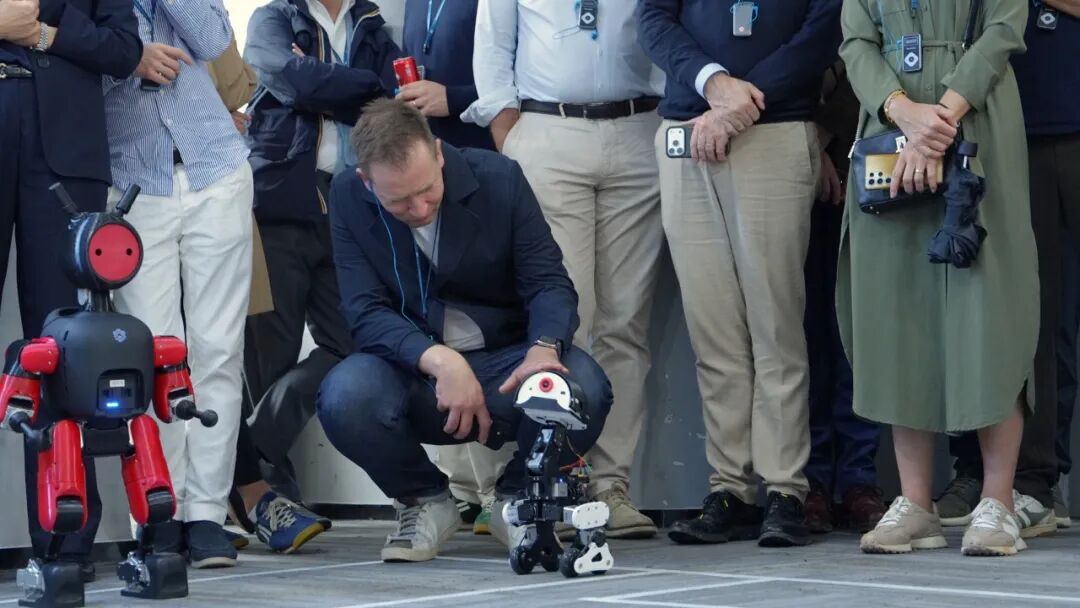
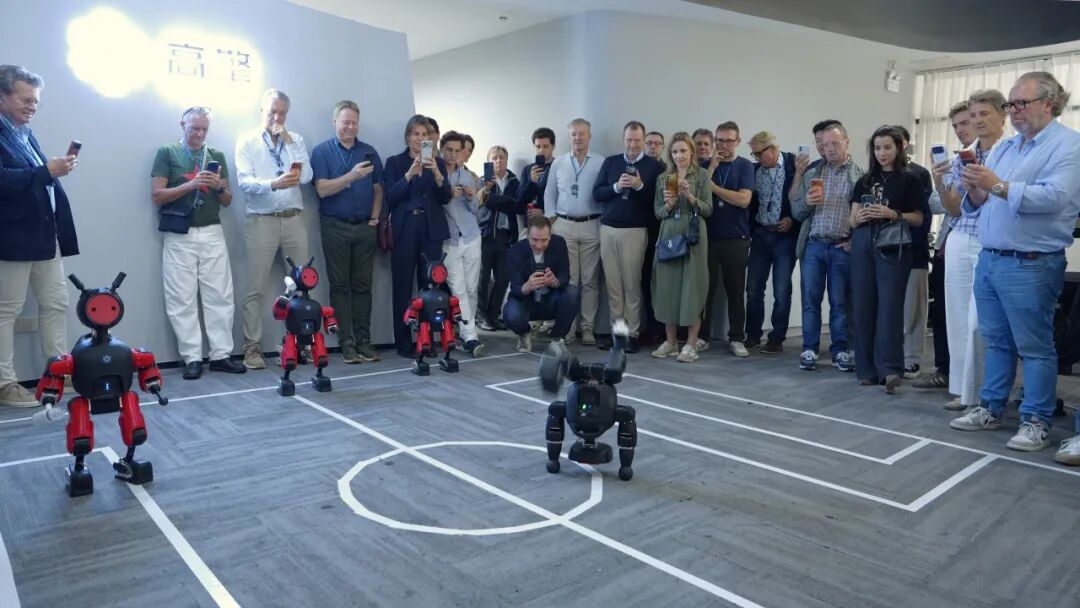
Compared with their larger counterparts, compact and approachable desktop-class humanoid robots carry an engineering advantage: they move more easily into laboratories, classrooms and homes. The visit centred on Mini Pi Plus, the model drawing the most attention overseas — lightweight, high-performance and built on an open ecosystem, it is the standardized humanoid base High Torque builds for developers worldwide. The delegation endorsed the company’s commitment to miniaturization, and its fit across a wide range of scenarios.
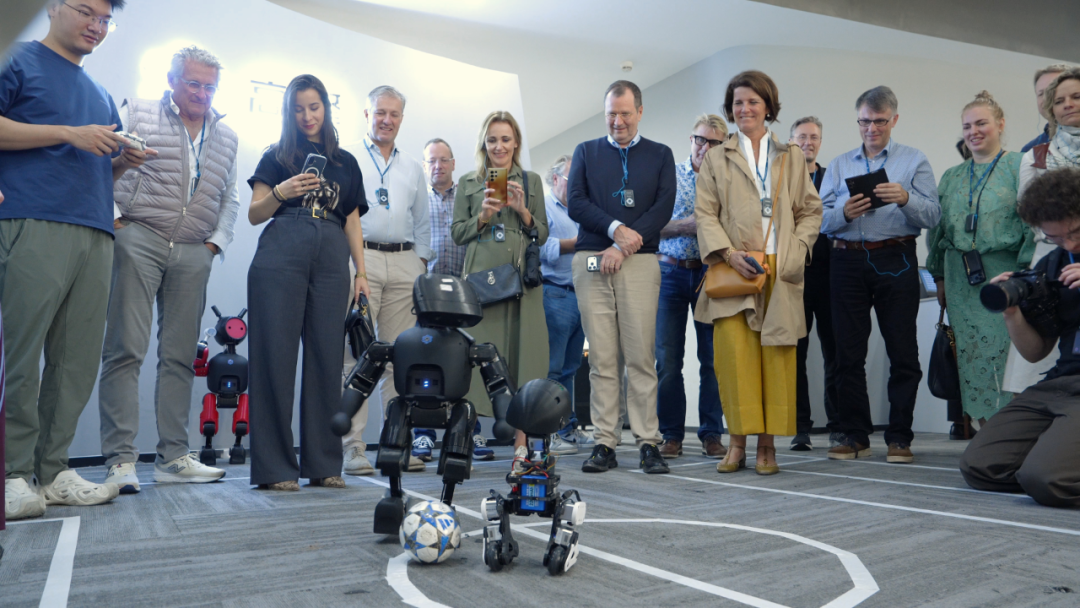
The High Torque team gave a concise briefing on the technical route and real-world practice behind small humanoid robots. Six years of full-stack humanoid development have gone into overcoming the structural, actuation and control challenges specific to small humanoids, and into steadily refining the platform. On top of it, developers can work on core motion algorithms — bipedal walking, balance control, multi-joint coordination — suited to university research, K-12 STEM education, competitions and shows, and brand interaction.
Connecting Developers Worldwide, Building an Embodied Ecosystem
High Torque also showed the delegation its full-stack capabilities: in-house integrated joint modules, reducers, motors and encoders, through to complete robot design and volume delivery — a self-developed chain end to end. Customers can take a finished robot, or buy joint modules and robot arms separately and build a solution of their own, matching the needs of very different projects.
After the briefing, the two sides discussed China–Europe robotics cooperation, the route to commercializing embodied intelligence, and what it takes to land in the European market. Delegation members described the pain points in their own sectors — logistics automation, intelligent medical equipment, industrial manufacturing, education — and explored technology integration, joint projects, overseas channels and localization with the High Torque team.
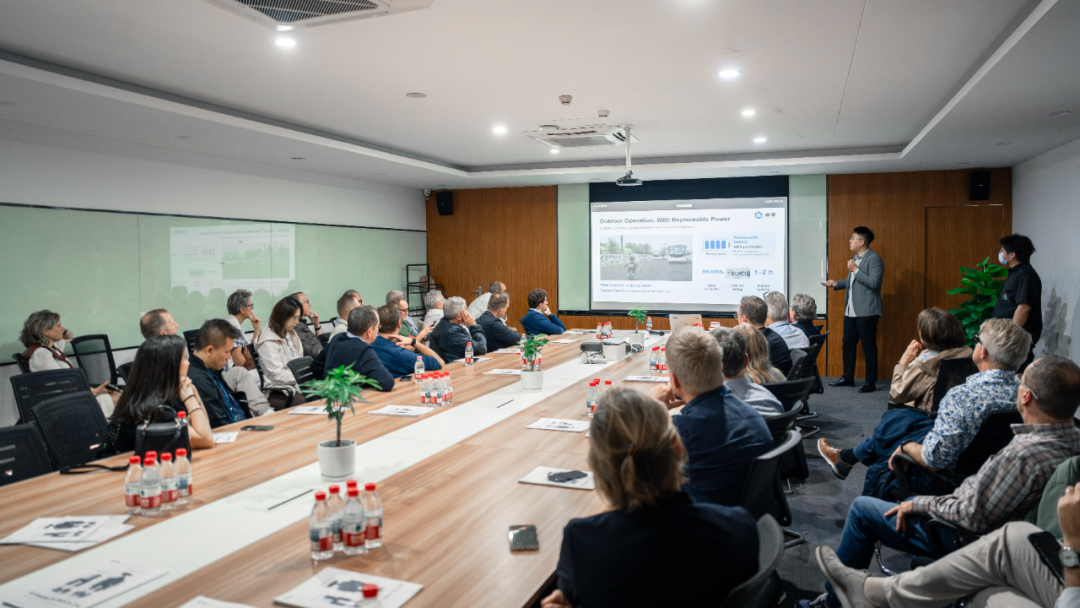
Humanoid robots and physical AI sit at the core of the next generation of intelligent hardware. Europe brings deep high-end manufacturing, precision engineering, research institutions and a mature base of B2B industrial customers; China brings a complete robotics supply chain, fast engineering iteration and a wealth of real-world test beds. The two sides complement each other — a solid foundation for cross-regional collaboration.
High Torque has stayed committed to open, global innovation. Its overseas work already covers North America, Europe, Japan and Korea, the Middle East and Latin America, supplying research institutions, developers and industry partners with modular humanoid hardware and development tools, and connecting developers worldwide as they explore where embodied intelligence can land. The company will keep the conversation with the European delegation going, supporting two-way collaboration in physical AI and robotics and seizing the opportunities that intelligent technology keeps opening up.
 Form submitted successfully!
 Form submission failed!
 Phone:400-6080-891
 Email:service@hightorque.cn
 Wechat:GQJD2022