
On November 14, the finals of the 13th North China Five-Province (Municipalities and Autonomous Region) University Robot Competition closed at the Shahe Campus of Beijing Information Science and Technology University. Several university teams competing with Mini Pi Plus took part in the humanoid robot competitive sports event and came away with strong results.
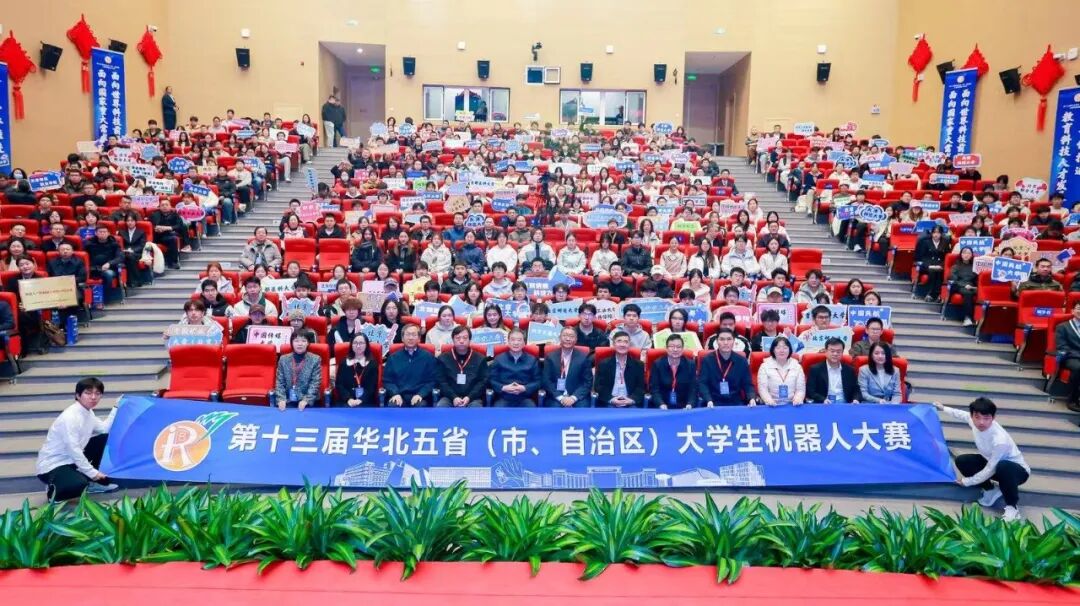
The competition began in 2012 as the Beijing University Robot Competition and was upgraded in 2013 into a regional event covering Beijing, Tianjin, Hebei, Shanxi and Inner Mongolia. Now in its 13th edition, it has become one of the most influential robotics competitions in North China.
This year’s event, themed “Technology for Good, Human–AI Collaboration”, drew 565 teams from 104 universities across 9 categories and 16 events, covering a wide range of robot applications and frontier technology.
The competition was also a live test for Mini Pi Plus: from visual perception and gait control to whole-machine stability, the platform’s capabilities were validated in a real competitive environment.
Results at a Glance: A Strong Scorecard for Mini Pi Plus
In the Beijing round’s penalty-kick event, teams using Mini Pi Plus took two of the three first prizes; in the North China finals penalty-kick event, three teams from Beijing Police College and Beijing Union University won first prizes. The full results:
Beijing Round | Penalty Kick
● Beijing Police College – Department of Smart Policing Technology: First Prize
● Beijing Union University – College of Teachers’ Education: First Prize
● Beijing Union University – College of Smart City: Second Prize
● Beijing University of Posts and Telecommunications – School of Intelligent Engineering and Automation: Third Prize
Beijing Round | Track and Field
● Beijing Union University – College of Smart City: Second Prize
● Beijing University of Posts and Telecommunications – School of Intelligent Engineering and Automation: Third Prize
● Capital Normal University – College of Artificial Intelligence: Third Prize
North China Finals | Penalty Kick
● Beijing Police College – Department of Smart Policing Technology: First Prize
● Beijing Union University – College of Teachers’ Education: First Prize
● Beijing Union University – College of Smart City: First Prize
North China Finals | Track and Field
● Beijing Union University – College of Smart City: Third Prize
● Beijing University of Posts and Telecommunications – School of Intelligent Engineering and Automation: Third Prize
Penalty Kicks and Track Events: Testing the Whole Machine in Continuous Motion
The humanoid robot competitive sports event is not a showcase of single moves; it tests whether a whole system can keep running.
In the penalty-kick event, the robot has to walk autonomously, recognize the target, adjust its position and shoot. The track events go further, testing gait stability, speed and adaptability to a complex course. If a robot leaves its line, loses balance or falls, whether it can recover quickly and finish the task directly changes the outcome.
From sensing the goal and the ball, to planning a gait and adjusting body posture, to completing the shot or keeping on the move, every step demands close coordination between vision, decision-making and motion control.
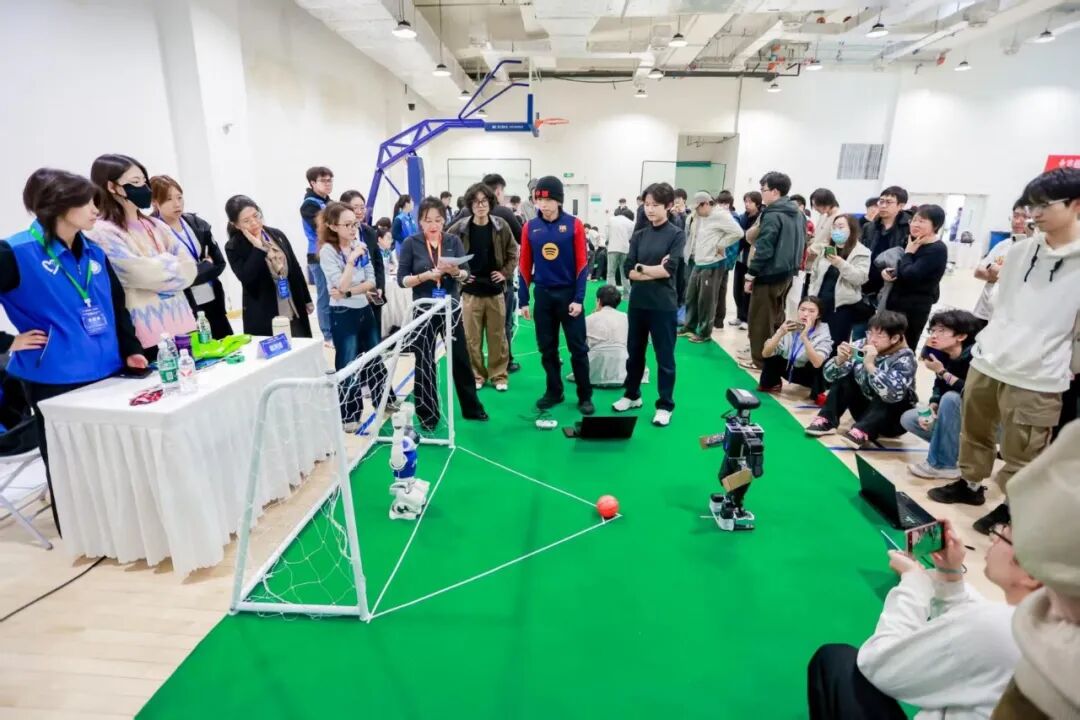
Algorithms that run in simulation also meet ground friction, mechanical error, collisions and long hours of continuous operation once they reach a real arena.
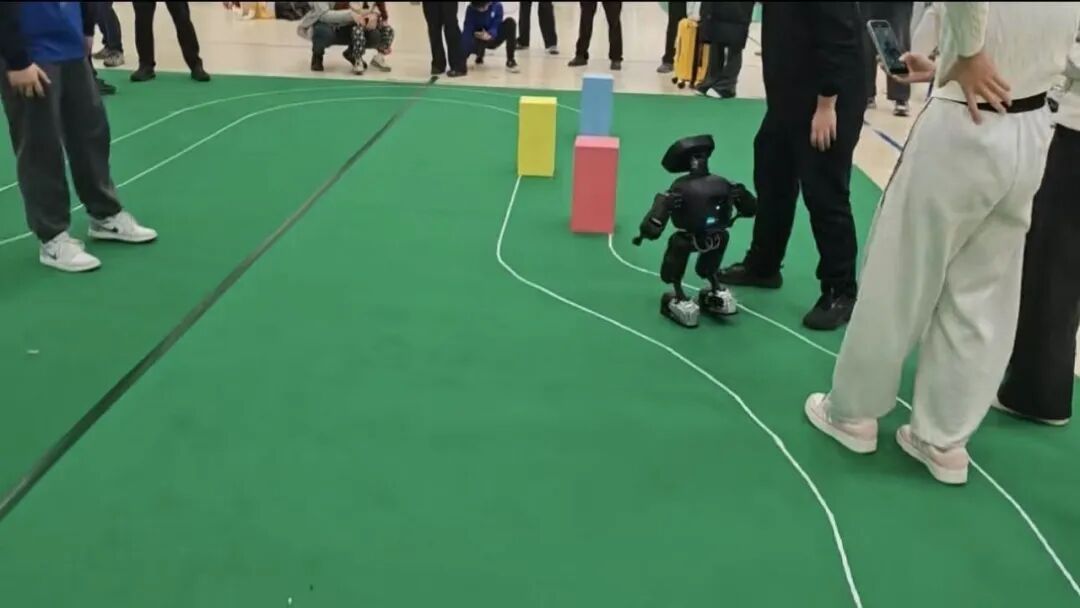
Hardware–Software Coordination: A Stable Development Base for University Teams
The entry at this competition was Mini Pi Plus Pro, built for research and education, competitive events and secondary development. The platform carries a D435i depth camera and an NVIDIA Jetson series main controller, giving vision recognition, environment modeling and autonomous interaction the compute and hardware foundation they need. It meets the technical demands of penalty-kick matches — target recognition, environment sensing, autonomous action — and gives university teams a complete platform from algorithm development to validation on real hardware.
1. In-house joints support high-intensity motion
Mini Pi Plus Pro carries High Torque’s self-developed integrated joint modules throughout, with peak torque up to 21 Nm. That balance of response, control precision and whole-machine stability underpins high-dynamic moves such as walking, shooting and getting up after a fall. The modular body can be taken apart and maintained quickly, so teams can debug in the run-up to a match and during it.
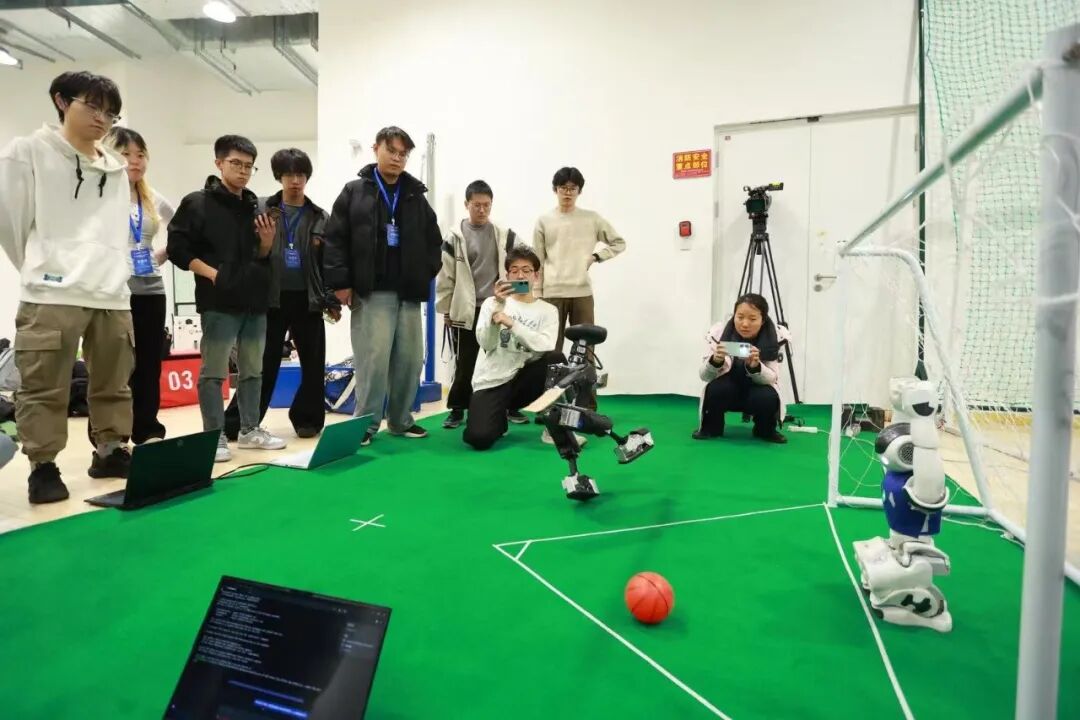
2. An open architecture that carries algorithm innovation
The platform runs a fully open software architecture with standardized development interfaces and an SDK toolchain, supporting work in motion control, machine vision, path planning and reinforcement learning, and carrying it from simulation training to deployment on real hardware.
3. Volume consistency for multi-robot coordination
Standardized production keeps different units closely consistent, which helps code reuse, equipment rotation and multi-robot coordination, and cuts the repeated debugging caused by hardware differences. For a university team, it means validated code and motion plans can move to another robot more reliably.
Talent Through Competition: Taking Algorithms Out of Simulation
Robot competitions put classroom knowledge into real tasks. Students face not only whether an algorithm runs, but whether the structure is reliable, how the equipment is maintained, how the team coordinates, and how unexpected problems get solved on the spot.
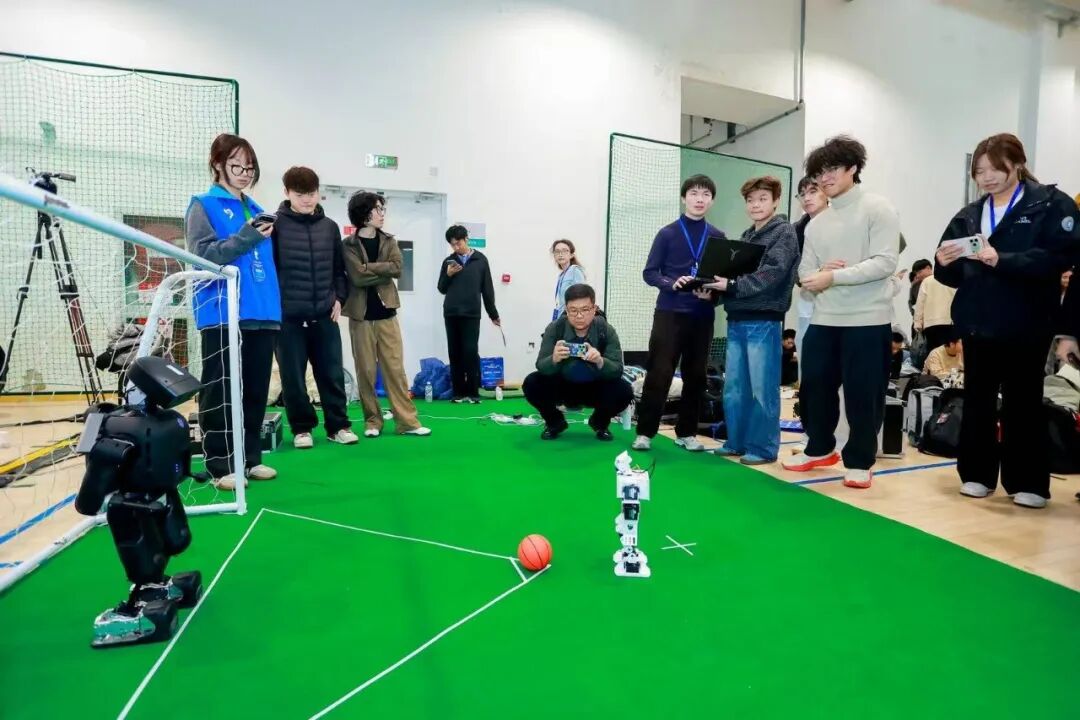
High Torque Robotics already supplies hardware platforms, development toolchains, pre-competition training and technical support to domestic ranked events such as the China Robot and Artificial Intelligence Competition and the China Robot Competition & RoboCup China, as well as to RoboCup international events, and works with more than 100 universities worldwide.
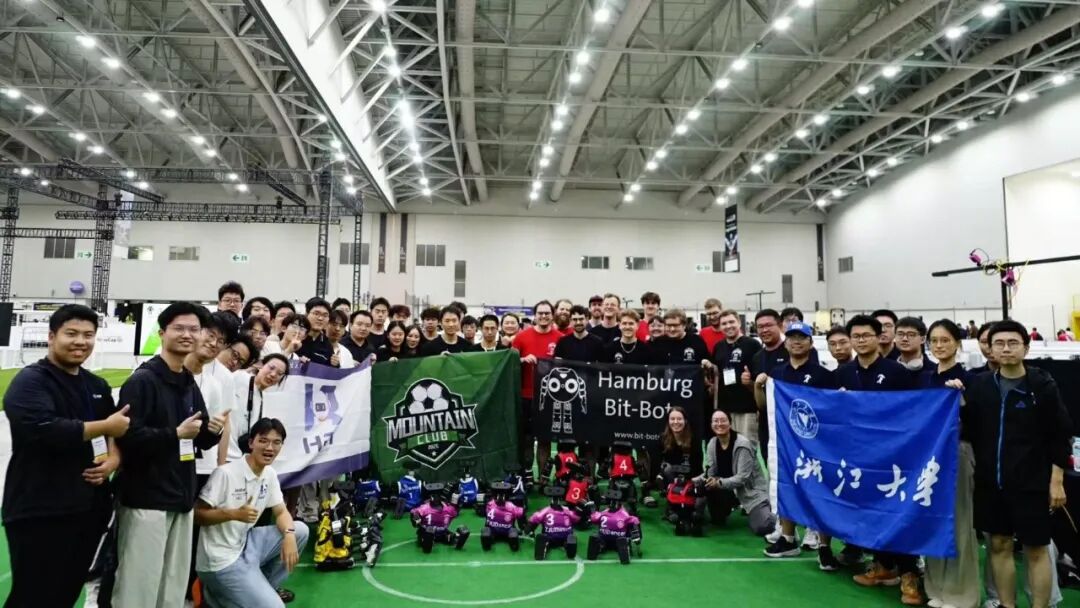
From simulation to real hardware, from the classroom to the arena, students put their algorithms to work on real tasks, and Mini Pi Plus is tested in university research and teaching in turn. High Torque Robotics will keep improving its humanoid robot development platform, toolchain and technical support, so that more university teams can run their algorithms on real robots and take their ideas to a real arena.
 Form submitted successfully!
 Form submission failed!
 Phone:400-6080-891
 Email:service@hightorque.cn
 Wechat:GQJD2022