
Back in April, Mini Pi plus unexpectedly went viral at the Yizhuang Robot Marathon in Beijing, with its online exposure exceeding 1 billion views across all platforms.
Engineer Liang put it perfectly in his article:
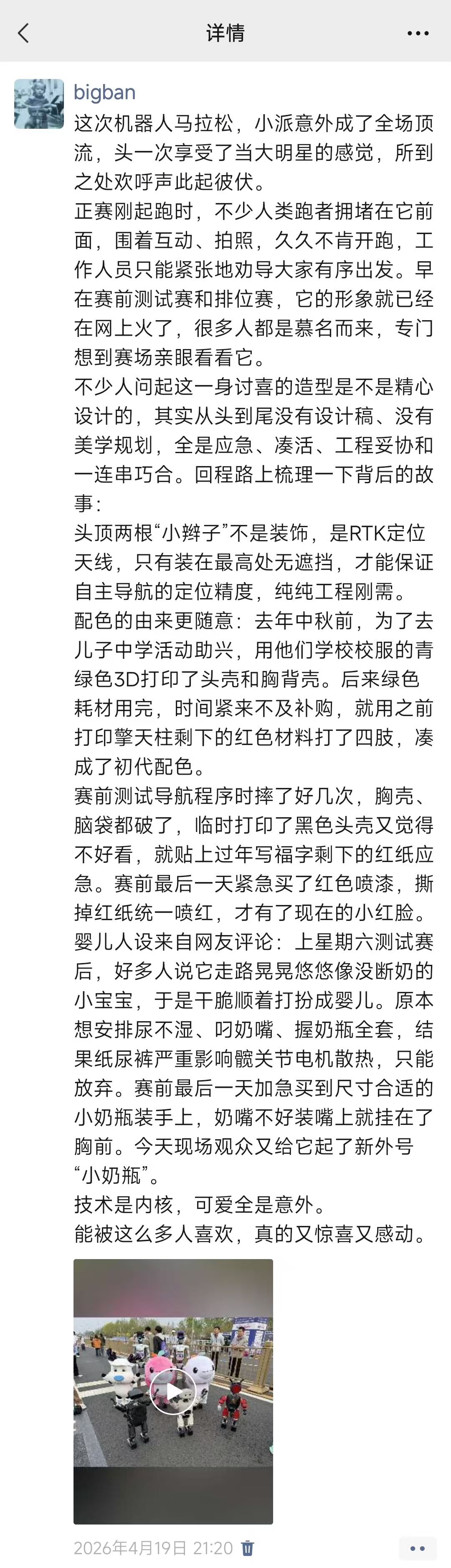
Thanks again for your help, Engineer Liang.
It is by no means sheer luck. If you're interested, you can read How We Build Robots. When it comes to robot prototype technology, we have solid confidence in our capabilities.
Before I got into robotics, I worked in online advertising, and before that, in the gaming industry. None of these experiences had anything to do with humanoid robots. Back then, almost no one paid attention to humanoid robotics at all. What's more, the company was going through an existential crisis, leaving even less reason for us to develop robots.
Why did I choose to develop humanoid robots?
Many people have asked me this question.
For one thing, it's not easy to explain clearly; for another, the time hasn't been right to talk about it. That's why I've rarely shared it publicly.
Riding on the popularity of Mini Pi plus, our products have also entered the mass production phase. To help everyone better understand High Torque Robotics, I feel it's the right time to share our story in full.
The reason I devote myself to robotics is not because it is a trend, but because I believe that advancing the evolution of intelligence is the most worthwhile cause for humanity to engage in.
I've told many people that there's no difference between working a job and starting a business. Essentially, both are a form of investment, and investment always hinges on certainty.
I have a bold assertion: Every problem in this world is ultimately a problem of mechanics.
When you can model a problem from a mechanical perspective, you gain certainty. Once you understand this principle and grasp macroscopic certainty, making major decisions becomes remarkably effortless and resolute.
I have always been deeply curious about fundamental questions. Many years ago, I kept pondering: all humans are mortal, and the universe will eventually head toward heat death — so what is the meaning of life?
Over time, I gradually came to sort out these thoughts. Being and non-being give rise to each other. Entropy increase is an objective natural phenomenon, while entropy reduction embodies subjective meaning. Evolution is a controllable way of entropy reduction; intelligence is an inevitable outcome of evolution, as well as a concrete manifestation of the direction of the universe. And life serves as the bootstrapping program for intelligence.
When you understand the age of the universe, the evolutionary journey of life, and the Great Filter theory, you may come to a conclusion similar to mine:
It is highly probable that humanity is the only advanced life form in the known universe.
And that grants us a unique cosmic significance.
If you acknowledge that higher-level intelligence is bound to emerge, and you also understand the inherent limitations of carbon-based life, then when given the chance to take part in creating the next generation of intelligent agents, you will easily come to a conclusion: this is the most meaningful work, and also the most worthwhile cause to dedicate yourself to.
AI is essentially an intangible existence, yet intelligence requires a physical form to enter the physical world and reshape reality. That is why we build robots. Back then, I had no clear starting point for working on AI, but developing robots was something one person could get started on independently.
Why humanoid robots?
Because humans are instinctively drawn to human-like forms. As a company that serves people, to survive and grow, we must cater to and align with human preferences.
Why develop small humanoid robots?
Because they are far easier for the public to accept. I often say that today's humanoid robots are just like personal computers back in the day.
I once thought smaller robots would be simpler to develop. Yet it has taken us more than five years to reach where we are today. Part of this is because we took many detours along the way, but I believe every detour we made in the name of exploration has been worthwhile.
This is also our style and attitude in product development: we must get to the bottom of every problem, resolve it thoroughly, and never settle for compromise.
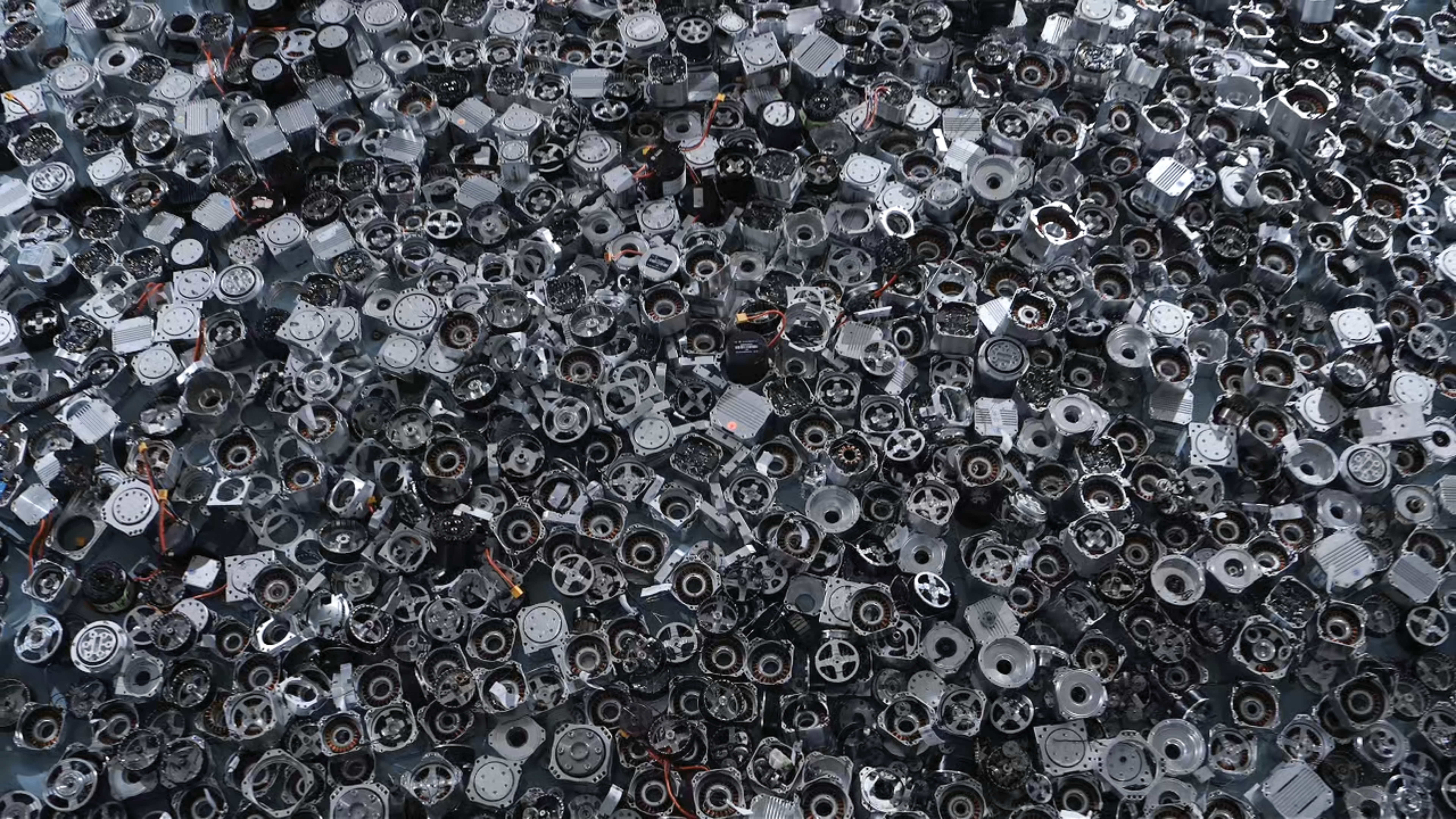
These are some of the scrapped motors we eliminated during the iteration process to perfect our motor design.
The same goes for Mini Pi plus. It is not perfect yet, but it keeps improving all the time, and it will definitely become an outstanding product.
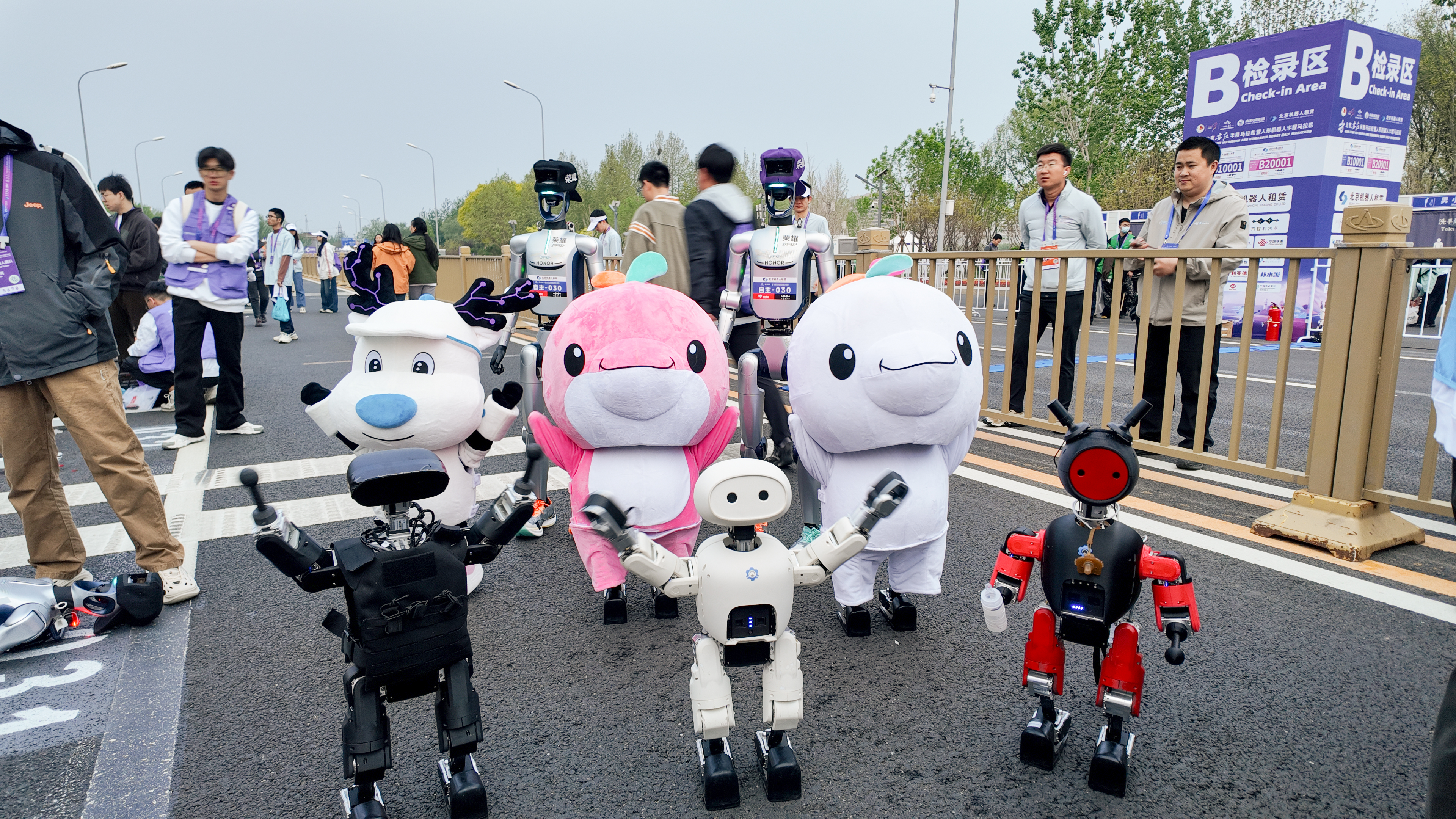
Group Photo of High Torque Robotics
That's all for now on why we develop humanoid robots. All the views shared are purely personal and subjective. If you disagree, just take it as the ramblings of a dreamer.
After more than five years of dedicated efforts, we have built full-stack independent R&D and manufacturing capabilities covering everything from core modules to complete robot units. Our products have met mass production standards, and we now operate standardized production factories.
On the software side, we have established fundamental in-house R&D capabilities in motion control, perception, and large model technology. We have laid a solid mechanical and technical foundation, and now we welcome more talented professionals to join us and jointly leverage this foundation to shape a broader future.
We are actively recruiting talents in the following fields, including founding partners:
Product Manager, Structural Engineer, Embedded Engineer, Hardware Engineer, Motion Control Algorithm Engineer, Perception Algorithm Engineer, AI Algorithm Engineer, Production Management Talent, Sales Talent, Marketing-related Positions.
If you agree with my views and possess solid expertise in your field, feel free to add my WeChat: davidnick.
Please include a self-introduction and your purpose for reaching out. Thank you.
High Torque Robotics is an extraordinary company, and I hold a unique perspective on what it stands for. We haven't secured any financing so far, and I intend to allocate more equity to every partner who has strived and grown alongside us. I will write a separate article to elaborate on the company's history, core philosophy, and my personal understanding of its mission and development.
 Form submitted successfully!
 Form submission failed!
 Phone:400-6080-891
  Email:service@hightorque.cn
  Wechat:GQJD2022