
From May 22 to 24, the 64th Higher Education Expo China was held at the Nanchang Greenland International Expo Center, bringing together over 1,000 exhibitors, 6,000 participating enterprises, and 1,500 universities.
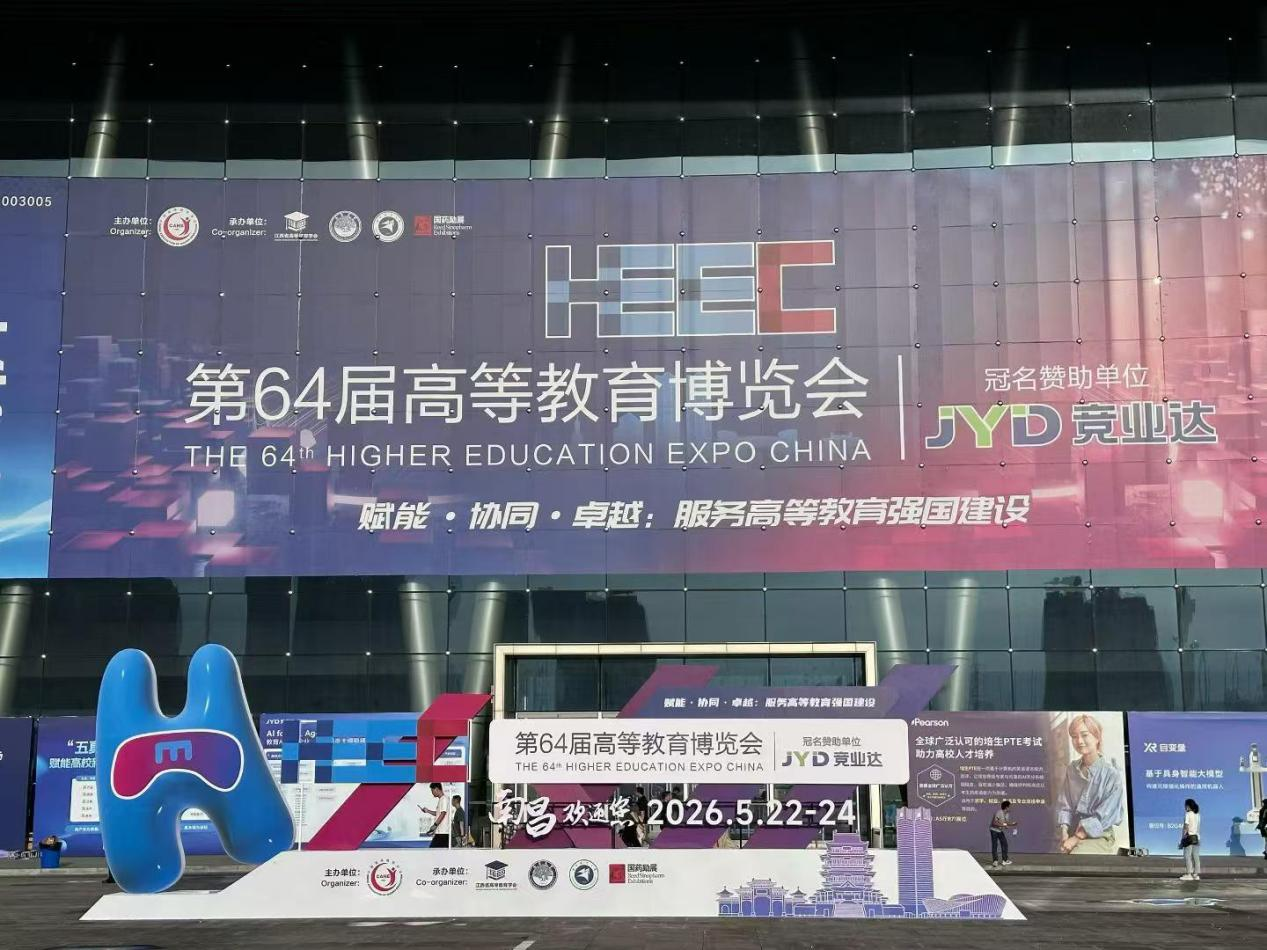
HighTorque Robotics showcased its high-performance humanoid robot Mini Pi plus alongside the bipedal robot Mini Pi at Booth B1B32, Hall B1, presenting a comprehensive one-stop solution for vocational and undergraduate education.
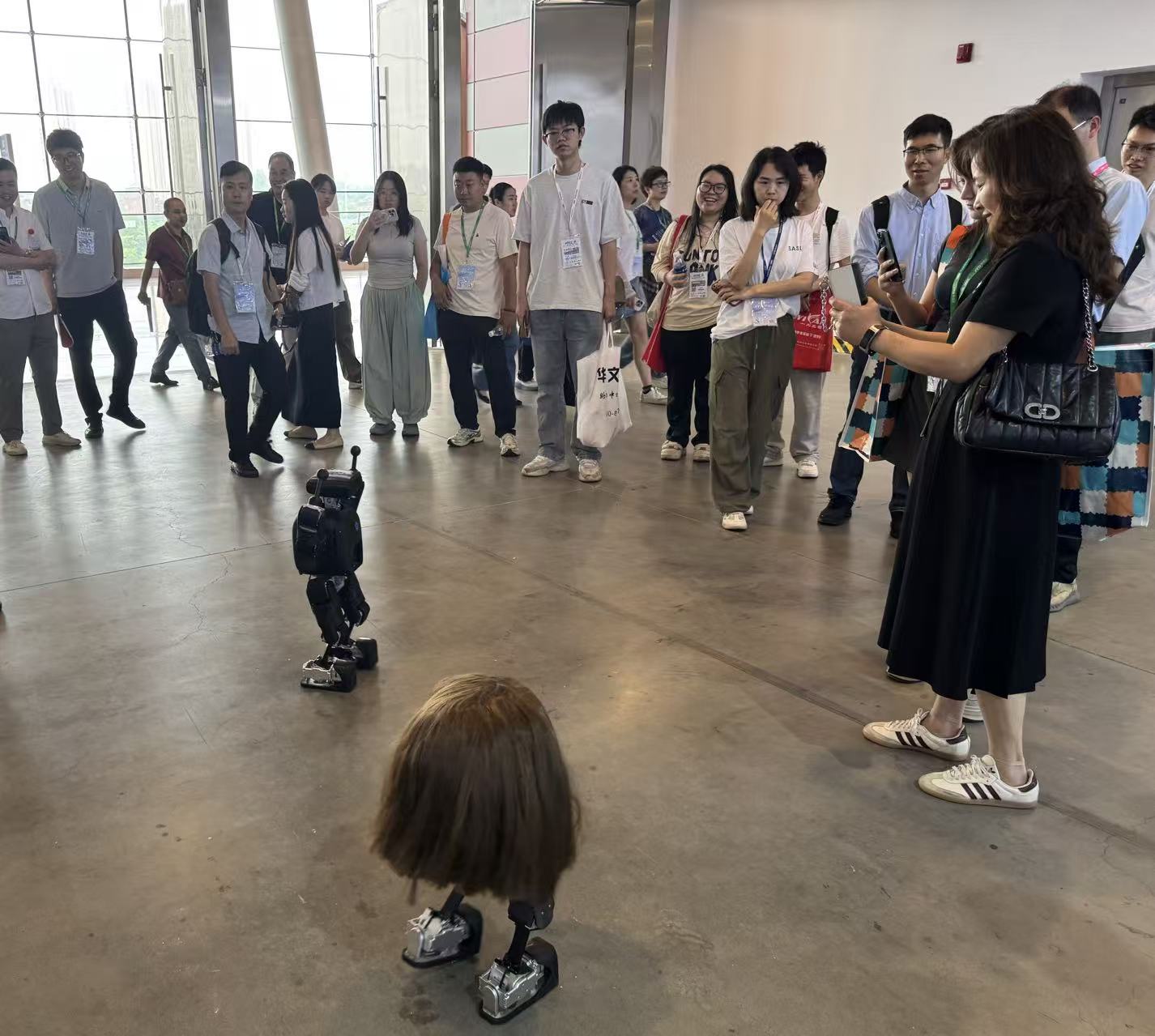
University Robotics Education: What's Really Missing?
The humanoid robot market has long faced persistent challenges: high-performance research robots come with prohibitive price tags and steep entry barriers, while educational robots lack the computing power to support real-world algorithm validation and deployment.
What’s missing is a hardware-software co-design platform that combines a lightweight, open architecture with robust secondary development capabilities. This is exactly the gap HighTorque Robotics set out to fill: fully open-source, in-house developed actuators, and a standardized development environment—delivering real development capability in a lightweight form factor.
Centered on the core needs of industry-education integration, HighTorque Robotics has built a complete solution around Mini Pi plus—spanning commercial applications and vocational education. From modular hardware platforms to standardized course systems, from competition support to research collaboration, the solution extends teaching beyond knowledge delivery into hands-on practice and system-level development.
Mini Pi plus: A Modular Platform Built for Secondary Development
Mini Pi plus is equipped with HighTorque's in-house developed joint actuators, integrating full functionality into a highly modular and compact chassis. Its design supports rapid disassembly and flexible reconfiguration—delivering high precision and stable reliability in a small footprint.
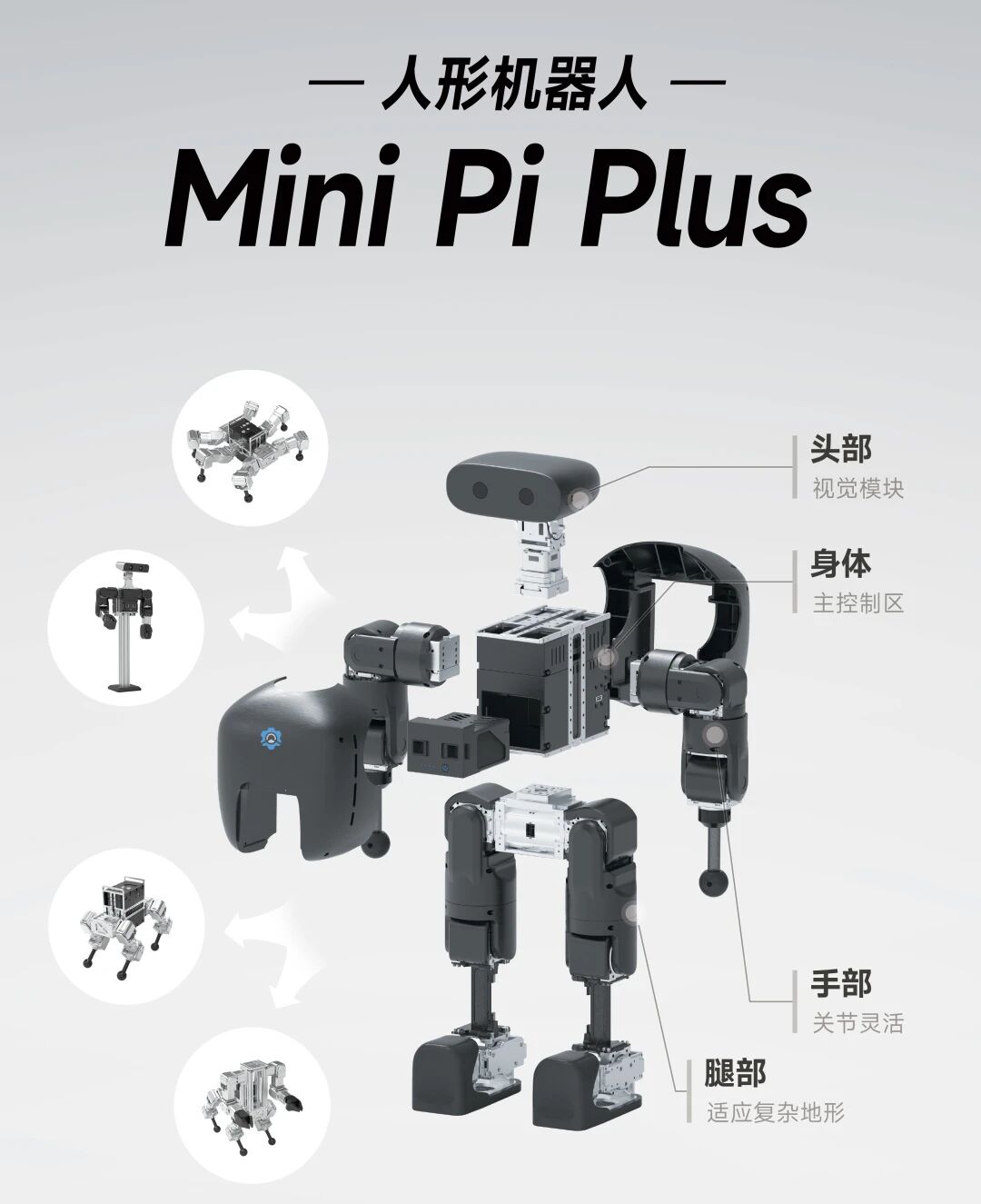
On the software side, HighTorque provides a standardized development system with one-click deployment tools. Key SDK functions are version-consistent, ensuring the same codebase runs reliably across different releases—eliminating repetitive environment setup and allowing students to focus on innovation rather than configuration.
The platform also supports peripheral expansion with vision modules, voice modules, grippers, and more, offering a flexible and scalable hardware foundation for teaching, competition, and research.
A One-Stop Solution for Vocational and Undergraduate Education
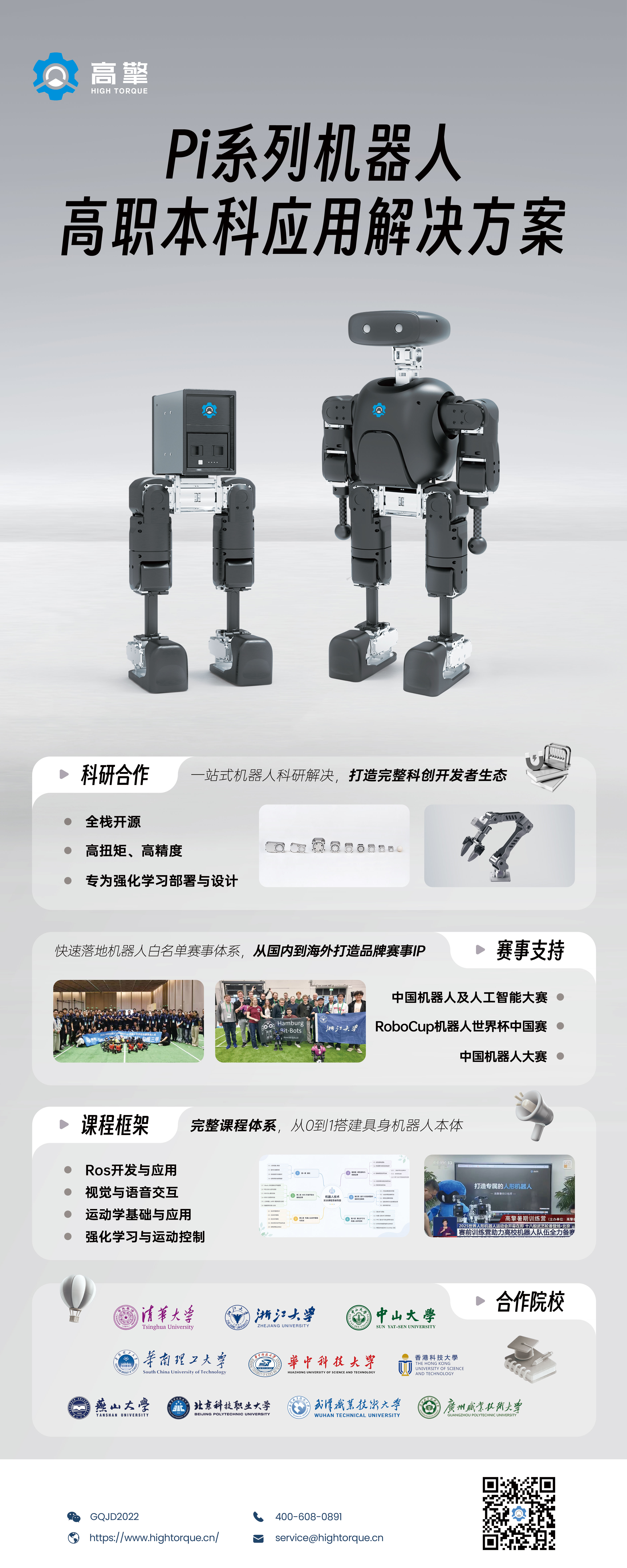
The Pi series robots are fully open-source, with dedicated optimizations for reinforcement learning deployment. High-torque, high-precision hardware pairs with a completely open codebase—supporting fundamental research in motion control and path planning, as well as cutting-edge topics in multimodal interaction and dexterous manipulation, providing research teams with a complete pipeline from algorithm validation to tangible results.
In competition, HighTorque supplies hardware platforms and development toolchains that meet official standards for China’s top-tier events—including the China Robotics and AI Competition, RoboCup China Open, and the China Robot Competition—alongside pre-competition training programs and full-spectrum technical support, helping institutions build a complete competition-driven education cycle from preparation to participation.
On the curriculum side, a comprehensive course system covers ROS development and applications, vision and voice interaction, fundamentals of kinematics, and reinforcement learning for motion control—guiding students from zero to mastery of embodied robot expansion and secondary development.
To date, HighTorque Robotics has established in-depth partnerships with over 50 institutions nationwide, spanning from comprehensive undergraduate universities to applied vocational colleges, and addressing the diverse talent development needs of the robotics field.
 Form submitted successfully!
 Form submission failed!
 Phone:400-6080-891
  Email:service@hightorque.cn
  Wechat:GQJD2022