
If Mini Pi Plus' clean sweep of the quarter-finals at RoboCup China and championship win at the German Open were only regional validations of a domestically produced mass-market platform, then its half-share of quarter-final spots at this international final, along with the adoption and recognition by traditional overseas self-developed strong teams, marks that High Torque Mini Pi Plus has completed the leap from "regional leader" to "global mainstream solution".
► Tournament Recap: Steady Advancement Strengthens Global Reach
As the world's top technical event in robotics, this year's RoboCup international competition gathered leading teams from China, Germany, South Korea, Australia, Indonesia and other countries. Most participating teams have over a decade of technical accumulation, delivering extremely high-intensity competition and technical density. Among the final quarter-finalists of the Humanoid Soccer Small Division, four teams adopted the High Torque Mini Pi Plus small humanoid robot, taking up half the spots.
The Bit-Bots team from the University of Hamburg defeated multiple strong teams all the way to the semi-finals. In the semi-final round, Hamburg Bit-Bots beat the K1 Air humanoid robot team from Nongda Shanhai 3:0, securing a spot in the final with a clean sheet. In the final match, they narrowly lost to the Wuhan University Invic team and finished as runner-up.
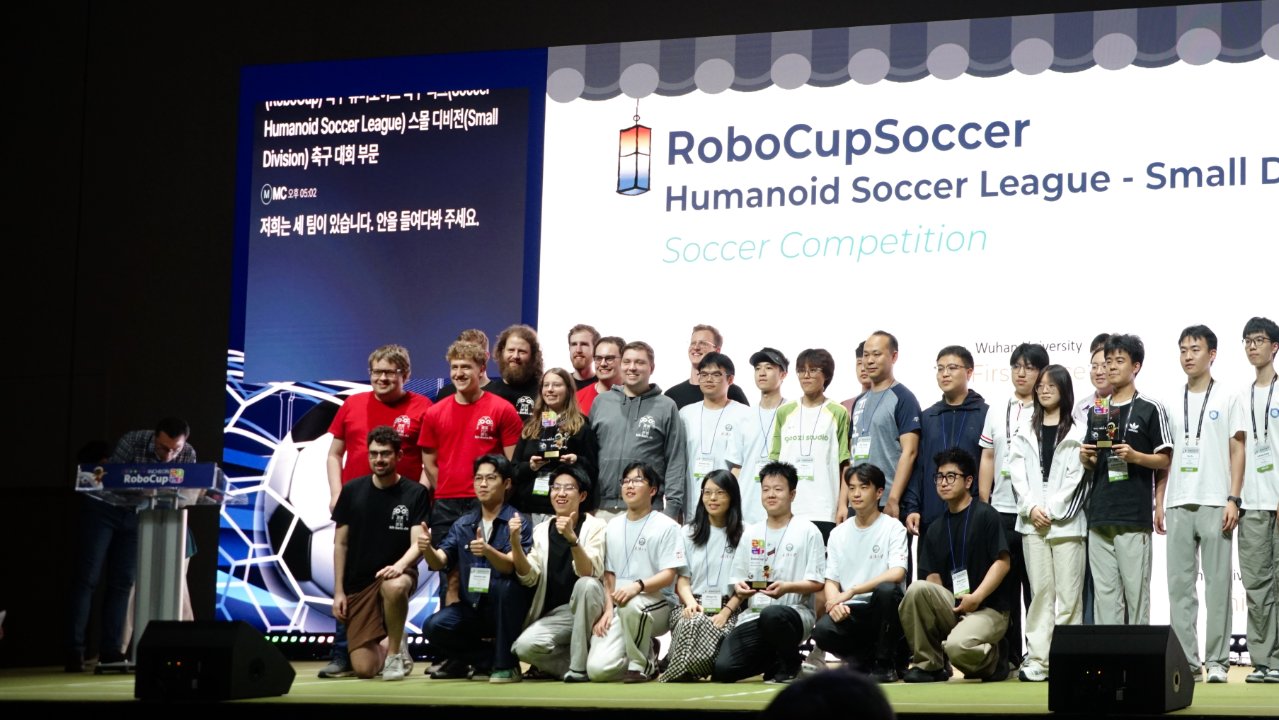
From single-team performance validation, to ecosystem universality verification, and then to adaptability validation at top international arenas, this three-step advancement continues to expand the capability boundaries of the platform.
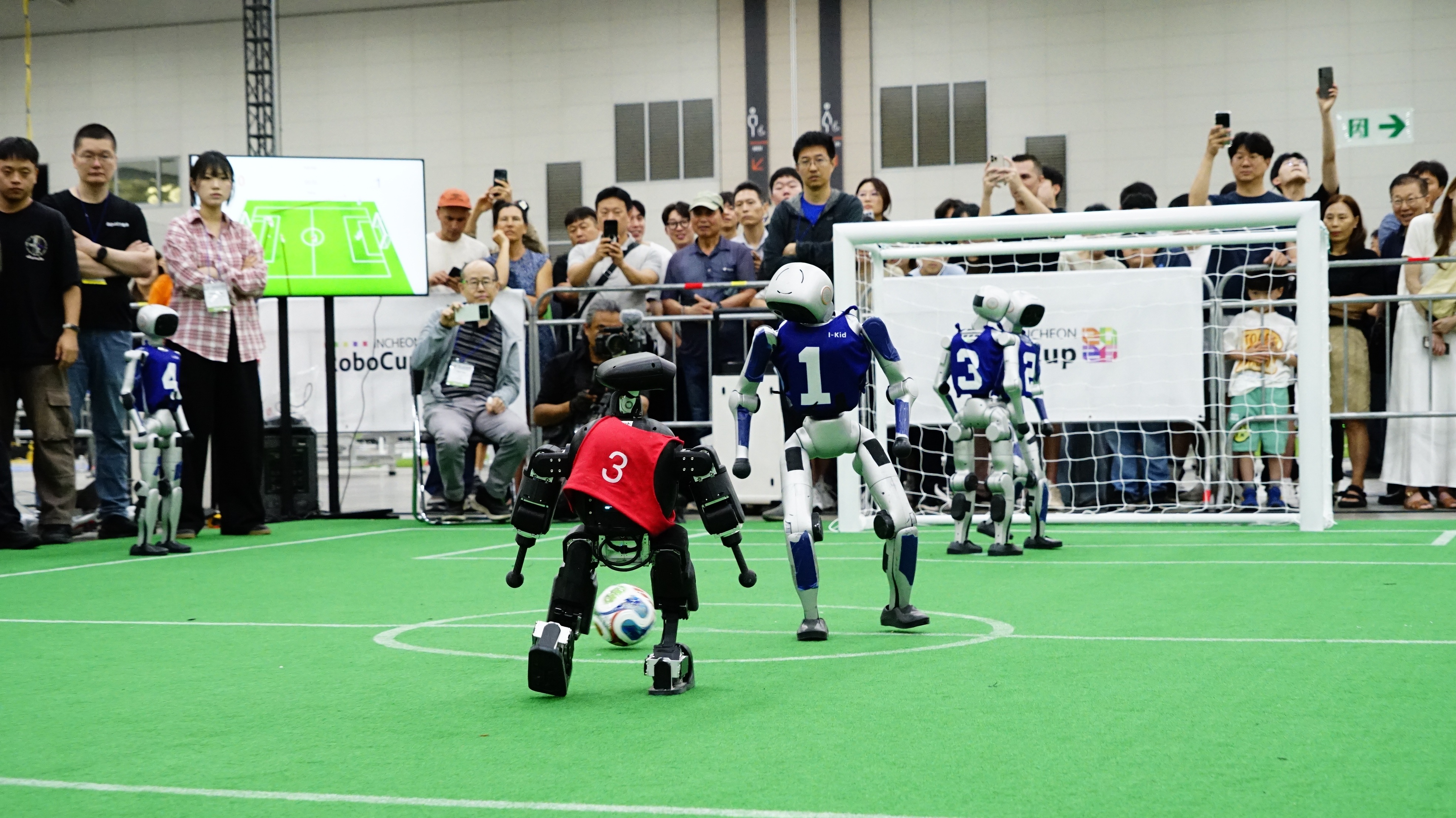
► Established Powerhouse Switches Course: Mass-Produced Base Replaces Self-Developed Solutions
As a long-standing powerhouse deeply engaged in humanoid robot teams, Hamburg Bit-Bots was once a typical representative of the "full-stack self-developed robot" approach. The team has launched multiple generations of self-developed robots including Hambot and Minibot, and has won multiple German Open championships and runner-up titles, as well as World Cup third place. It is a technical benchmark in the European and global humanoid soccer field.
After the RoboCup German Open in March this year, this top team — which had built its own hardware for many years — officially switched to the Mini Pi Plus as its competition platform. In just three months, Hamburg Bit-Bots completed efficient tactical training based on the platform, implemented full-stack strategies including soccer motion control, fast fall recovery, visual perception, decision-making, and multi-robot communication, and finally achieved excellent results at the international competition.
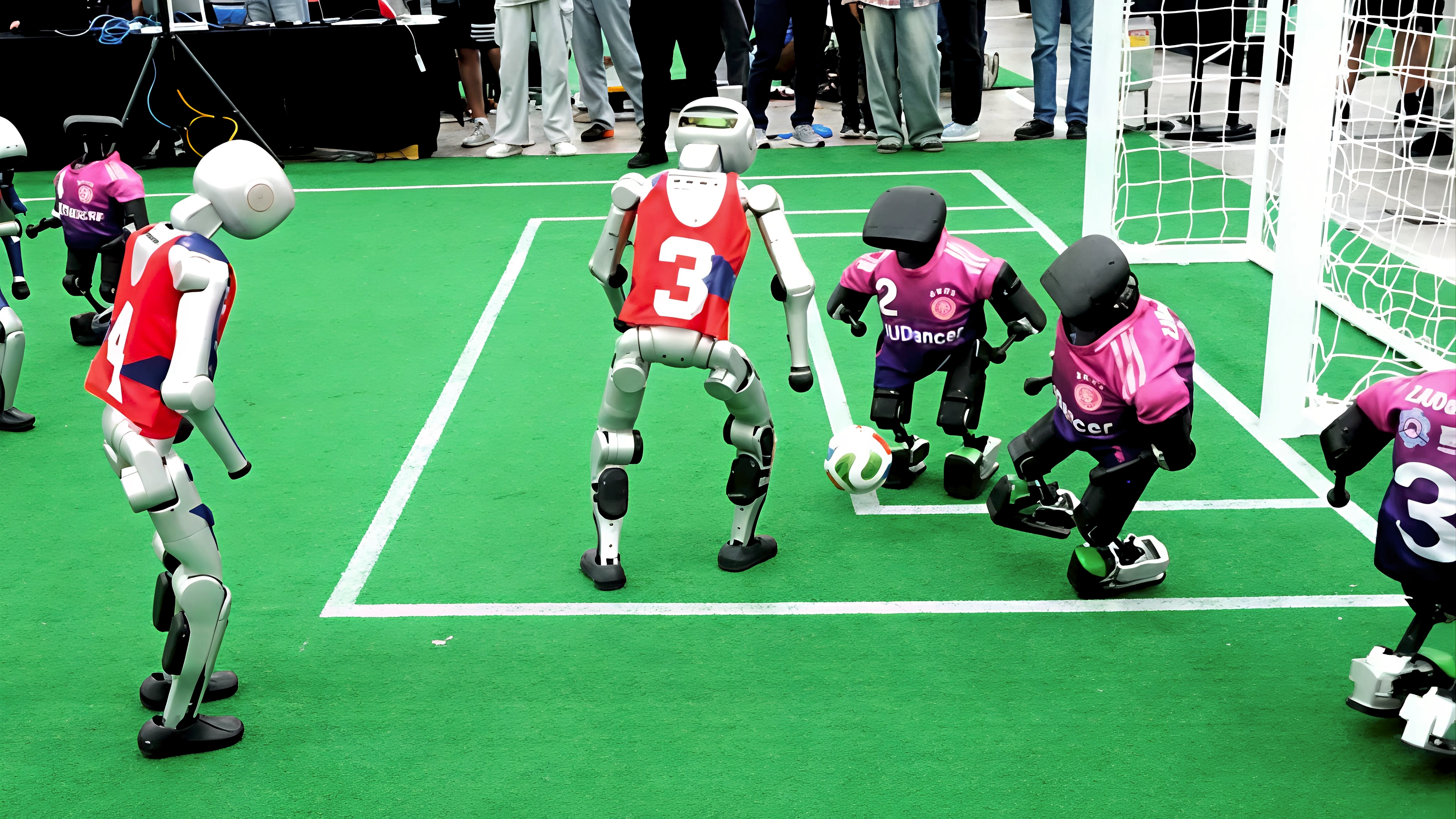
Three Core Reasons for Hamburg Bit-Bots' Choice of Mini Pi Plus:
- Top-tier hardware performance: The self-developed joints deliver torque, rigidity and response speed that meet the demands of high-intensity competition, eliminating the need for teams to invest extensive effort in polishing underlying hardware.
- High openness and open-source accessibility: The motor and motion control SDKs are open source, directly supporting rapid adaptation of visual perception and whole-body motion control, without limiting the team's technical upper limit.
- Stable and consistent mass production: Standardized mass production ensures reliability for multi-robot collaboration and match rotation, reducing operation and maintenance costs.
These three core advantages mean that Mini Pi Plus has transcended its positioning as a "competition tool for teams" and become a general-purpose technology base recognized by top international R&D teams. It has replaced the "hand-built robot" solutions of overseas top universities with solid technical strength and an open ecosystem.
Currently, Hamburg Bit-Bots has open-sourced its soccer strategies based on Mini Pi Plus, available on GitHub:
► Full-Stack Support: Building a Competition-Grade General-Purpose Base
Centered on the standardized mass-produced platform, Mini Pi Plus builds an integrated full development ecosystem of "hardware + software + toolchain", providing mature and stable general technical foundations for domestic and overseas competing teams, helping teams focus on developing innovative algorithms and competitive tactics.
Software layer: Full-link algorithm iteration consolidates the dual core foundations of motion control and perception
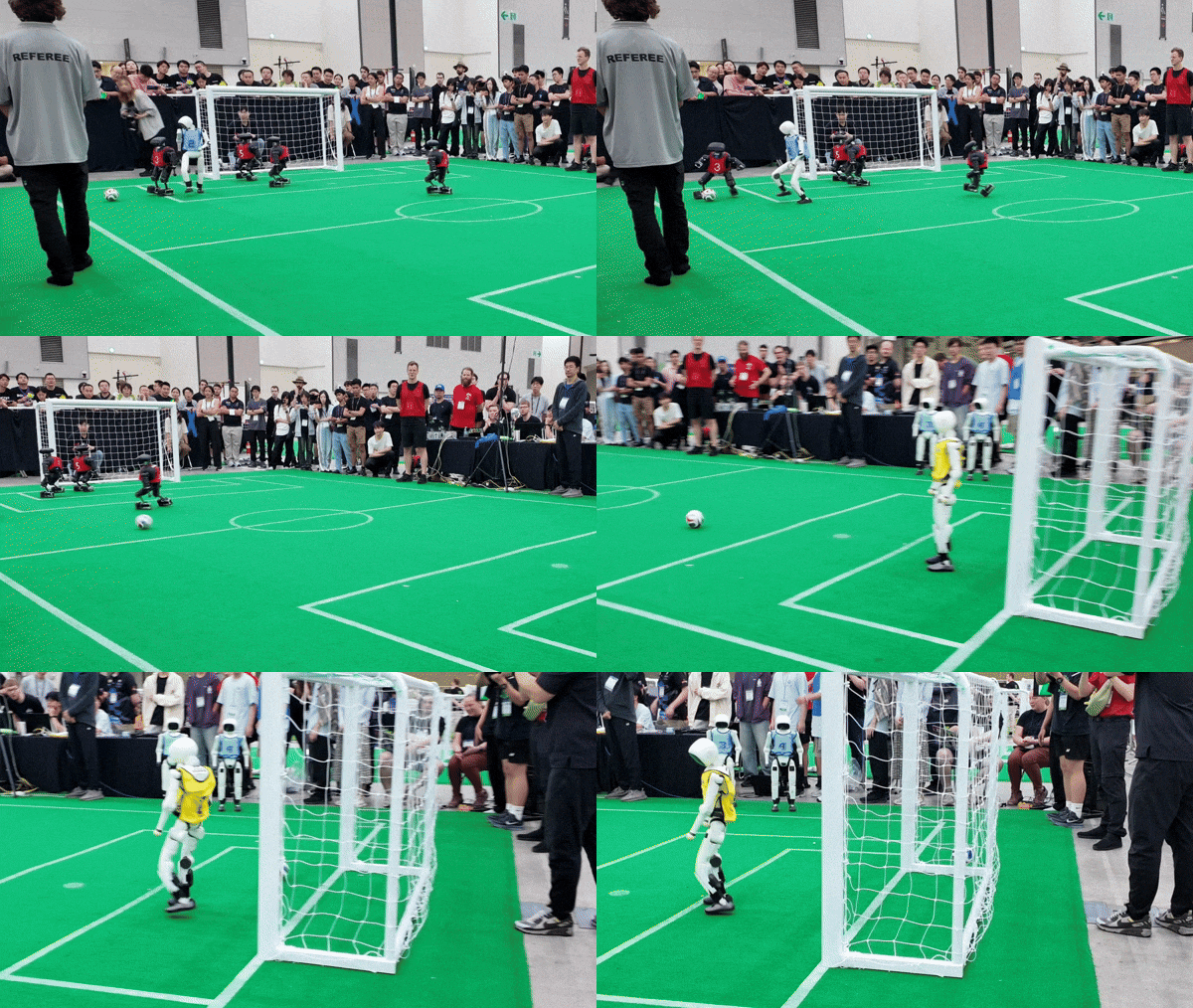
- Self-developed high-dynamic motion control base: Covers a full set of motion capabilities including high-speed sprinting, powerful shooting, fast fall self-recovery, dribbling, passing and receiving, and external disturbance resistance; supports multi-posture and multi-angle shooting from front, side and back positions; can complete fall-to-stand movement in as fast as 0.5 seconds, with stable walking and high-speed running solutions adapted to various venues.
- Accurate visual positioning to support decision-making: Equipped with a binocular vision system, it provides real-time soccer coordinates and ball speed data for each Mini Pi Plus unit; simultaneously collects venue environment information to calculate the robot's global coordinates; paired with a multi-robot data collaboration mechanism, it realizes full-court information sharing, delivering high-dimensional pitch situation data for teams.
Hardware targeted optimization: Expanded observation field of view to strengthen underlying perception capabilities
In response to practical tactical demands such as close-range ball control and close-range ball detection, the R&D team carried out refined modifications to the head structure of Mini Pi Plus, greatly expanding the observation field of view and effectively improving the robot's ability to recognize soccer balls and field markers at close range.
► Open Ecosystem: Promoting Inclusive Deployment of Humanoid Robot Technology
Just a few years ago, domestic humanoid soccer competitions generally relied on imported general-purpose platforms from overseas, with core hardware and technical standards defined by overseas manufacturers. In just a few years, High Torque Mini Pi Plus has not only achieved domestic substitution, but also been exported back to overseas markets, becoming a mainstream hardware option for global competitions. This progress is backed by the overall rise of China's full humanoid robot industry chain.
Beyond technical capabilities, High Torque's core value lies in transforming achievements accumulated on the competition field into reusable open resources, lowering R&D thresholds for the entire industry. Previously, High Torque officially launched a full series of official technical documentation systems, with complete development and operation & maintenance materials made available simultaneously, covering all scenarios of secondary development, hardware operation and maintenance, and peripheral use.
High Torque Secondary Development Documentation Link:
https://www.hightorque.cn/docs
Meanwhile, the algorithm strategies accumulated by High Torque in this international competition will also be open-sourced to official documents and open-source repositories in the future.
From winning the German Open, to covering all quarter-final spots at the China competition, and now claiming half of the quarter-final spots at the international final, High Torque Mini Pi Plus continues to set new heights for domestically mass-produced humanoid platforms.
As small humanoid robots become the core carrier for embodied intelligence R&D and application validation, High Torque will continue to use extreme competitions as a testing ground to polish its technical base, connect global developers through an open ecosystem, promote the popularization of advanced humanoid robot technology, and empower more industrial scenarios.
 Form submitted successfully!
 Form submission failed!
 Phone:400-6080-891
  Email:service@hightorque.cn
  Wechat:GQJD2022